
Before Icaros. Before AROS One. Before AEROS, Tiny AROS and AROS Vision, there was AROS-Max.
There are operating systems that disappear because they failed and then there are operating systems that disappear because they succeeded in ways that history later takes for granted. AROS-Max belongs to the second category.
Today, the name is unfamiliar even to many people who know the history of AROS. Its original website, aros-max.co.uk, is long gone. Its downloads have largely vanished from the modern web. Screenshots survive in scattered archives, old news stories and forgotten personal pages. The project itself has become something of a digital archaeological site.
Yet AROS-Max deserves a place in the history of Amiga-inspired computing because before the AROS community had a family of distributions, it had one.
AROS-Max.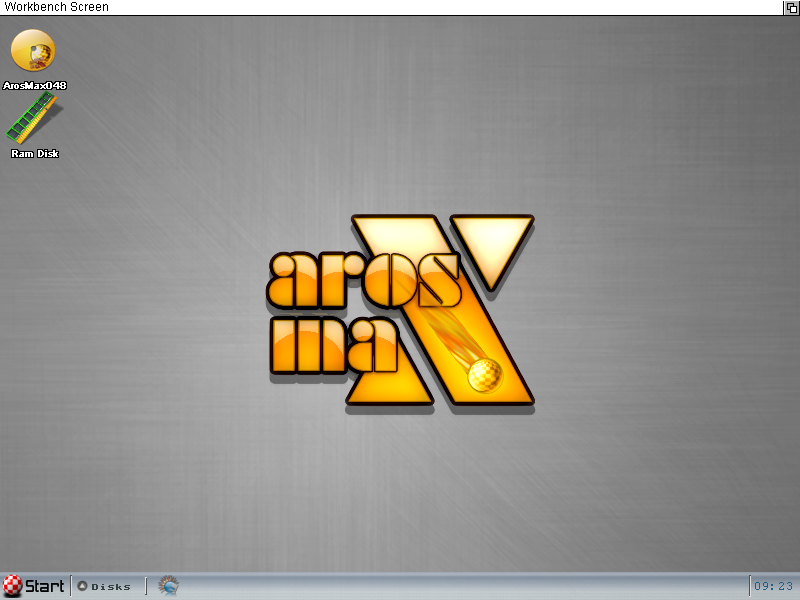
The AROS project's own historical archive provides the clearest marker of its importance. In August 2005, it announced:
“AROS has gotten its first distro — AROS-Max!”
The project described it as a nicely configured, bootable CD containing considerably more software than the ordinary development snapshots and builds.
That made AROS-Max more than an obscure old Live CD. It was the beginning of an idea that would shape the AROS ecosystem for years to come.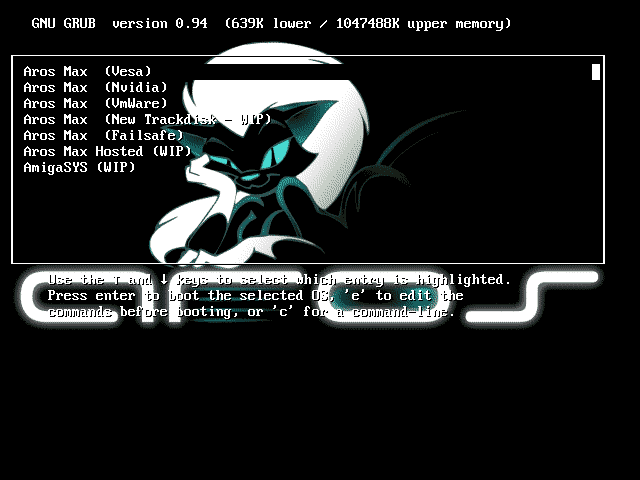
AROS was not born as a distribution
To understand why AROS-Max mattered, we have to go back to the world of AROS in the early 2000s.
The Amiga was already a legend. Commodore had disappeared. Amiga Technologies had come and gone. The community had fractured across hardware, operating systems and competing visions of the future. There was MorphOS. There was the emerging AmigaOS 4 effort. And there was AROS.
The Amiga Research Operating System had a radically different proposition: recreate the AmigaOS programming environment as an open-source operating system, while taking the opportunity to improve upon the original design and make it portable to modern hardware.
The concept was audacious.
But in those early years, AROS was primarily a development project. For developers, that was fine. For everyone else, it was another story.
A nightly build is not an operating-system product. A collection of binaries isn't a desktop. A source tree isn't an invitation. And a pile of partially finished components isn't necessarily something a curious Amiga user wants to install on their only PC.
What AROS needed was somebody to take those pieces and say:
Here. Try this.
That was AROS-Max.
The first taste
By November 2004, AROS-Max was already being described as a preconfigured Live CD.
Version 0.2.0 bundled developer tools, games, demos and other software into a ready-to-use AROS environment. Contemporary reporting specifically described it as being aimed at newcomers and people who simply wanted to get a taste of the Amiga Research Operating System.
That distinction is easy to overlook today, but it was important.
Instead of asking users to assemble their own AROS environment from development components, AROS-Max gave them a finished starting point:
Download.
Burn.
Boot.
Explore.
The concept was simple. But simple ideas can be transformative.
A distribution before there was a distribution ecosystem
AROS-Max arrived at an interesting moment in computing. Live CDs were becoming increasingly popular. Linux distributions were using them to let people experience an operating system without immediately touching their hard drive. Knoppix would become famous for exactly this approach.
AROS-Max applied the same philosophy to the Amiga-inspired world.
It turned AROS into something you could demonstrate. You didn't have to explain AROS to a friend. You could boot it, put the mouse in their hand, show them Wanderer, open a drawer and launch a program.
The operating system suddenly became real.
That was AROS-Max's first great contribution.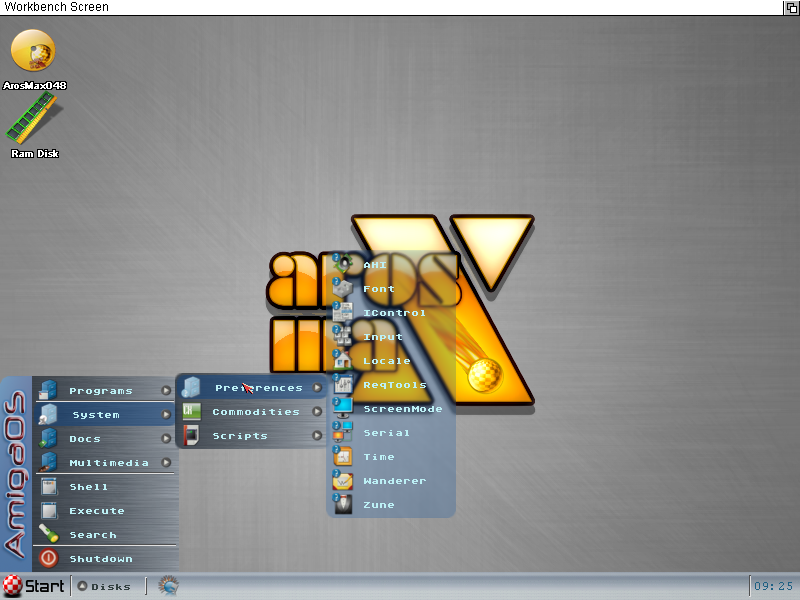
The Windows trick
Then it did something even more interesting: it made AROS possible to try without even requiring a reboot.
In December 2004, AROS-Max 0.2.0 became available as a Windows-hosted package. The concept was beautifully straightforward. Download a self-extracting archive, extract it, run winaros.bat, and AROS-Max would launch in a window using QEMU.
The contemporary package was approximately 75 MB.
In today's world of virtual machines, that sounds ordinary. In 2004, it was an inspired way of introducing people to an experimental operating system.
You didn't need to repartition your PC. You didn't need to install a bootloader. You didn't need to dedicate a machine or find compatible native hardware.
You could simply open a window.
And inside that window was AROS.
AROS in seven seconds
One of the best surviving contemporary accounts comes from an OSNews review published in January 2005. The reviewer downloaded the Windows version, launched the included batch file and watched AROS boot inside QEMU. The system reportedly reached the Wanderer desktop in roughly seven seconds.
For an operating system running inside an emulator on a Windows PC of the period, that was an impressive demonstration.
Then came the part that really mattered.
The reviewer recognized Wanderer immediately. For an Amiga user, the interface made sense: the drawers, the Workbench-inspired desktop, the preference programs and system tools. The environment carried the unmistakable DNA of AmigaOS.
But it wasn't AmigaOS.
It was something new. Something open. Something that could run on ordinary PC hardware.
That was the promise of AROS.
AROS-Max made that promise tangible.
Wanderer
The heart of that experience was Wanderer, the AROS desktop environment.
To an Amiga user arriving from Workbench, Wanderer was immediately familiar. To a Windows user, it was something entirely different. And that was part of the appeal.
AROS wasn't trying to imitate Windows. It was building from the Amiga tradition instead.
The result was an interface that felt compact, direct and unmistakably Amiga-like.
The contemporary OSNews review noted that anyone familiar with AmigaOS should have felt at home. It also highlighted Zune, AROS's implementation of the Magic User Interface concept, which provided a more flexible GUI framework than the original AmigaOS 3.1 environment.
That combination was revealing. AROS-Max wasn't simply preserving the past. It was trying to preserve the ideas of the past while moving them onto new hardware.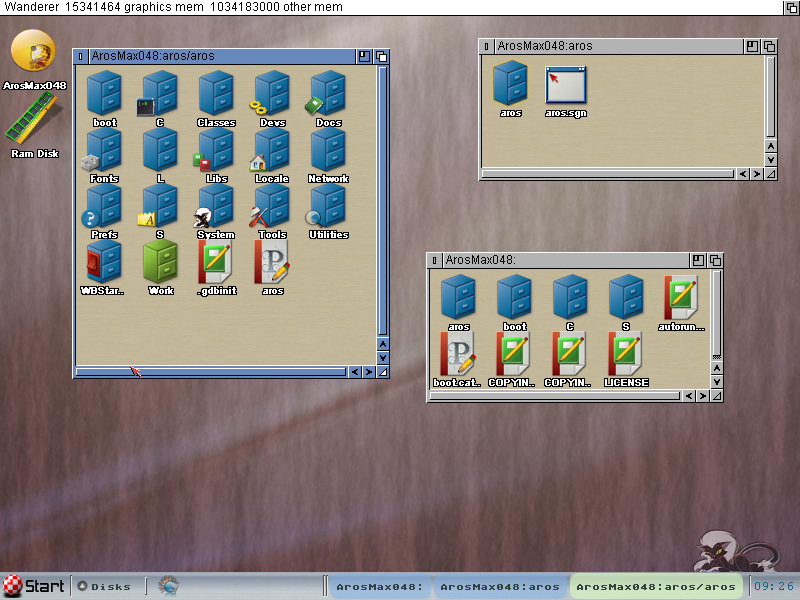
The PC as the new Amiga
That was perhaps the most radical part of the project.
The Amiga community had spent years debating replacement hardware. Should the future be PowerPC or custom hardware? Should it be a new Amiga or a clone?
AROS took another path.
Use the PC.
A 2006 OSNews retrospective emphasized precisely this distinction: unlike AmigaOS 4 and MorphOS, AROS wasn't tied to an exotic hardware platform. There were millions of PCs, they were cheap and they were everywhere.
AROS-Max made one of them look like an Amiga.
More than a demo disc
It would be easy to characterize AROS-Max as nothing more than a demonstration CD. That would sell it short.
The early releases contained considerably more than the underlying AROS snapshots. Version 0.2.0 included developer tools, games, demos and additional software within a preconfigured environment designed to make AROS approachable.
This introduced a pattern that would become fundamental to later AROS distributions: the operating system itself was only part of the experience.
The other part was curation.
Which applications should be included? Which tools should be configured? What should the desktop look like? How should the user install it? What should happen when they first boot?
AROS-Max was answering those questions before there was an established template for doing so.
2005: AROS-Max grows up
The pace of development was striking.
By September 2005, AROS-Max had reached version 0.4.6, described at the time as a work-in-progress beta on the road toward 0.5.0. The ISO included the AROS TCP/IP stack and an AROS port of the classic Mosaic browser, while users were encouraged to report bugs.
This was a significant change from the earliest releases.
AROS-Max was no longer simply giving people a taste of AROS. It was beginning to demonstrate an increasingly complete computing environment: networking, web browsing, development tools, applications, games, demos and an installation system.
The distribution was becoming a showcase for the progress being made across the wider AROS project.
AROS-Max 0.4.8
Then came the release that would become the best-known AROS-Max version: 0.4.8.
Released in December 2005, it was a substantial Live CD accompanied by a collection of screenshots. Those screenshots are more than decoration today. They provide evidence of what AROS looked like and how AROS-Max presented itself.
They show a project that was no longer merely collecting developer binaries. It was presenting a vision of what an AROS desktop could become.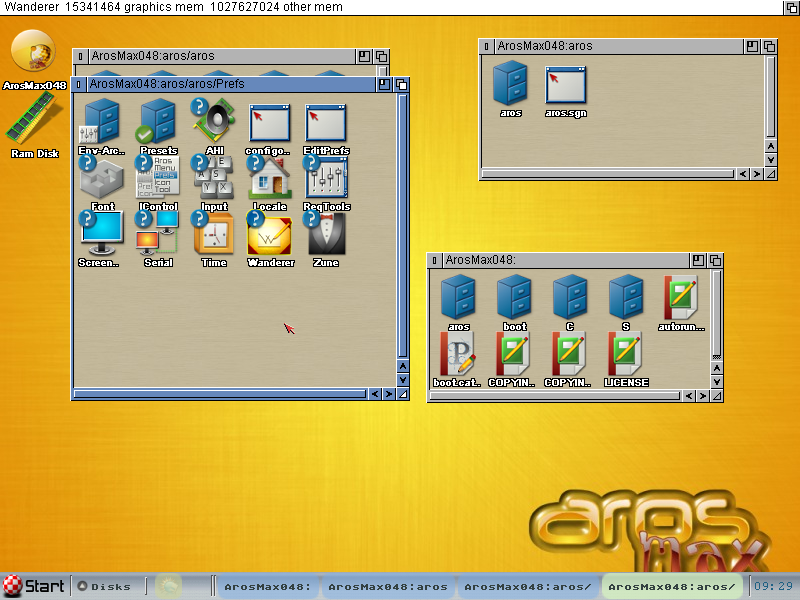
The desktop that survived
One surviving AROS-Max 0.4.8 screenshot shows the Wanderer desktop in all its mid-2000s glory.
There is something wonderfully period-specific about it: the icons, typography, taskbar, menus, color scheme and tiny details of the desktop.
It looks like a glimpse into an alternate history of personal computing—one in which the Amiga philosophy didn't disappear, but migrated from custom chipsets to commodity PCs and from Workbench to Wanderer.
From Commodore's proprietary world to an open-source project, AROS-Max was one of the first places where that alternate history could actually be experienced.
The “Amiga feeling” without the Amiga hardware
This was the genius of the idea.
AROS-Max wasn't trying to recreate a physical Amiga. It was trying to recreate the experience of using one.
An Amiga isn't simply a 68000 processor and custom chips. It is also the philosophy of the operating system: the responsiveness, simplicity, compactness and sense that the machine isn't constantly getting in your way.
AROS-Max took those ideas and placed them on a PC.
For somebody who had grown up with an Amiga, that could be surprisingly powerful. You could be sitting in front of an ordinary beige or black x86 machine and suddenly feel as though you had stepped sideways into another version of computing history.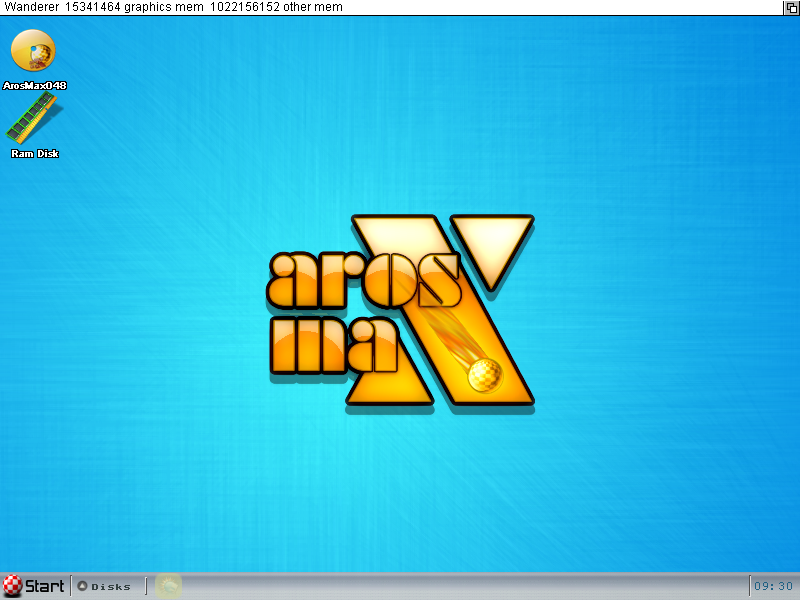
And it was still experimental
Of course, AROS-Max wasn't magic.
Applications were scarce. Productivity software was limited. There was no true office suite, and the system remained very much under development. The early Windows-hosted version also lacked the networking support that later releases would provide.
But that was precisely what made the project interesting.
AROS-Max didn't need to be finished to succeed. It needed to make an unfinished operating system interesting enough to try.
That is a difficult thing to accomplish.
The ecosystem begins to form
A distribution didn't just help users. It helped developers.
A developer could work from the same image everyone else was using, see what worked, identify what didn't, package software into a recognizable environment, and demonstrate an application without requiring every user to build AROS themselves.
As the software ecosystem expanded, centralized repositories began appearing as well. In August 2005, OSNews reported the launch of the AROS Archives as a central repository for AROS software.
The pieces were beginning to connect:
AROS.
Software repositories.
Distributions.
Documentation.
Community forums.
Screenshots.
News coverage.
An ecosystem was forming.
And AROS-Max had helped provide the bridge between the underlying operating system and the people who wanted to experience it.
A template for what came next
AROS-Max was never supposed to be the final form of AROS.
It was a vehicle—a way of taking a constantly changing operating system and presenting it as something a human being could actually experience.
Once that model existed, others could take it further. They could create their own distributions, specialize them, add applications, redesign the desktop, target different hardware and pursue different philosophies.
And that is exactly what happened.
The distributions that followed
Over time, the AROS world developed a remarkable variety of distributions and derivative environments.
Icaros Desktop became one of the most recognizable names in the AROS world, emphasizing a polished desktop experience. AROS One developed its own identity and software collection. AEROS explored combining AROS with Linux technologies. Tiny AROS pursued a more compact approach, while AROS Vision brought AROS concepts into the world of classic 68k Amiga hardware.
Many other projects experimented with different combinations of hardware, software and presentation.
Each had its own story.
But they shared something important: they inherited the idea that an operating system is more than its binaries. It is the experience surrounding them.
AROS-Max was among the first to demonstrate that idea within the AROS world.
The strange case of AROS-Max
There is something almost poetic about what happened next.
The project that helped establish the concept of an AROS distribution is now one of the least visible.
Later projects are better remembered, with easier-to-find websites, abundant screenshots and active communities. AROS-Max, meanwhile, survives mostly through digital fossils: old OSNews articles, archived screenshots, forum posts, forgotten ISOs, Internet Archive pages and scattered installation reports.
Researching AROS-Max therefore feels less like studying software and more like computer archaeology.
Yet those fragments tell an important story.
By September 2006, AROS-Max 0.4.8 was still being presented as one of the easiest ways for newcomers to experience AROS. A contemporary OSNews retrospective recommended downloading the ISO, burning a bootable CD, running it under QEMU or installing it to a hard drive, with version 0.5 already on the horizon.
By then, AROS-Max had become something more than a distribution.
It was a gateway.
If someone asked:
“I keep hearing about AROS. How do I try it?”
The answer could simply be:
“Get AROS-Max.”
A remarkably prescient idea
Looking back with twenty years of hindsight, several of AROS-Max's choices seem remarkably prescient.
It lowered the barrier to entry, allowing people to experience AROS without compiling the system or assembling software themselves.
It embraced Live CD technology, letting users experiment without immediately committing a hard drive.
It embraced virtualization, allowing Windows users to explore AROS through QEMU without abandoning their existing operating system.
It curated software rather than simply presenting a collection of system components.
And it understood that presentation mattered. Screenshots mattered. Desktop design mattered. The first impression mattered.
Most importantly, AROS-Max made AROS tangible.
How AROS-Max disappeared
Why did it disappear?
That is the harder question.
AROS-Max existed at the intersection of several difficult challenges: a small development community, a rapidly evolving AROS core, changing hardware compatibility, developing networking support, limited applications, scattered documentation and the considerable effort required to maintain a distribution.
Eventually, the project simply faded from view.
There was no grand finale or dramatic shutdown. No final announcement neatly closed the story.
Just fewer releases. Fewer references. An increasingly outdated website.
And eventually, silence.
That is how many early open-source projects ended:
Not with a bang.
With a broken link.
The archaeology of an idea
Today, the surviving AROS-Max material carries a different significance.
The screenshots are historical artifacts. The old news reports are documentation. Surviving installation guides reveal how people actually interacted with AROS.
Most valuable of all are the user comments.
They capture excitement and frustration, debates about priorities, questions about networking and hardware, installation attempts, and dreams about what AROS might become.
Taken together, these fragments preserve more than the history of a distribution.
They capture a community in the process of inventing something new.
Writing history forward
It is tempting to write computer history backward.
We see Icaros, AROS One, AROS Portable, AROS Vision, Tiny AROS and the many other distributions that followed. Because those projects are easier to find today, they can appear to be where the story began.
They weren't.
Before there was an AROS distribution ecosystem, there was an experiment that demonstrated the model.
AROS-Max.
The AROS project's own archive provides the simplest historical marker:
AROS got its first distro—AROS-Max.
Everything that followed belongs to another chapter.
But this was the first.
A little piece of an alternate future
Perhaps that is why AROS-Max remains so fascinating.
Booting it today, where surviving images and emulation make that possible, would reveal an unmistakably old operating system: old fonts, old icons, old interfaces, old hardware assumptions and old applications.
Yet the idea behind it doesn't feel old at all.
An open operating system inspired by AmigaOS.
Running on ordinary hardware.
Packaged as a complete desktop.
Available as a Live CD.
Runnable inside another operating system.
Freely distributed.
That vision still sounds remarkably relevant.
Around 2004, a small group of people decided that AROS shouldn't just be something developers built.
It should be something people could try.
They called it AROS-Max.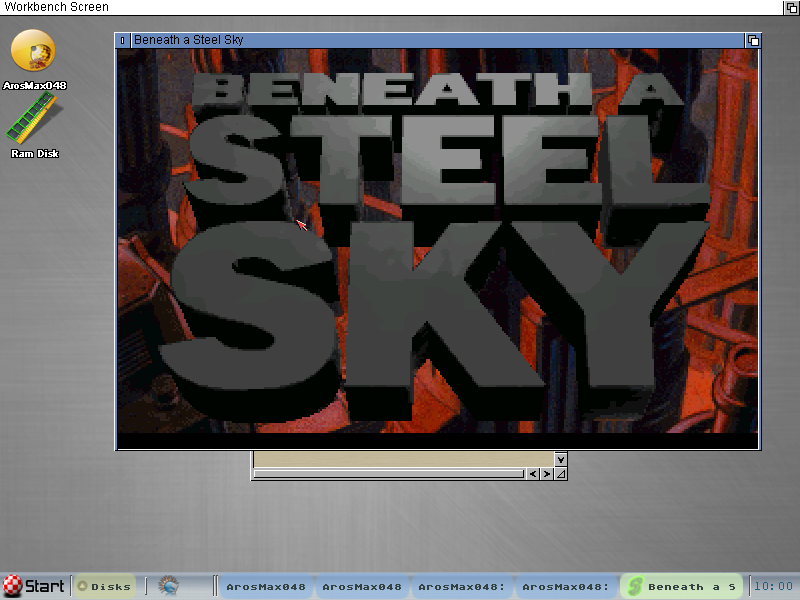
Why AROS-Max deserves to be remembered
AROS-Max never became the most famous or longest-lived AROS distribution. It didn't have the resources of a commercial operating-system project, and it didn't solve all of AROS's problems.
It didn't need to.
Its contribution was simpler and, in the long run, more important.
It proved that AROS could be packaged, demonstrated and made approachable. It showed that an unfinished operating system could be presented as a coherent experience, and it gave later projects a template they could take much further.
Today, the name survives mostly in old screenshots and scattered references. But behind those fragments is an important piece of AROS history.
Before there was an ecosystem of AROS distributions, there was AROS-Max.
Before there were polished AROS desktops, there was Wanderer on a Live CD.
Before running AROS in a virtual machine became routine, there was AROS-Max running inside Windows through QEMU.
And before the AROS world branched into the many distributions and philosophies we know today, there was one project that showed what was possible.
It was small.
It was experimental.
It was sometimes rough around the edges.
And it was, unmistakably, ahead of its time.
AROS-Max was the first.
And that is why it deserves to be remembered.
AROS-Max: The surviving timeline
|
Year |
Event |
|
1997 |
AROS project begins |
|
November 2004 |
AROS-Max 0.2.x appears as a preconfigured, bootable Live CD |
|
December 2004 |
AROS-Max 0.2.0 becomes available as a Windows-hosted QEMU package |
|
January 2005 |
Contemporary OSNews review highlights AROS-Max as an easy way to experience AROS |
|
August 2005 |
The AROS project officially describes AROS-Max as its first distro |
|
September 2005 |
AROS-Max 0.4.6 WIP appears with TCP/IP and Mosaic |
|
December 2005 |
AROS-Max 0.4.8 is released |
|
2006 |
AROS-Max 0.4.8 remains a recommended entry point for newcomers |
|
Afterward |
The AROS distribution landscape expands with numerous later projects |
Surviving evidence
The most valuable surviving sources include the AROS project's own historical archive, contemporary OSNews reports, Amiga-News archives, surviving screenshots, and the various archived pages and installation guides that remain accessible today.
The original aros-max.co.uk site is no longer active, making those surviving fragments particularly valuable to anyone documenting the history of AROS.
The strongest evidence for calling AROS-Max the first AROS distribution is not retrospective community folklore. It is contemporary documentation from the AROS project itself, which explicitly called AROS-Max its “first distro” in August 2005.
That gives AROS-Max's place in AROS history an unusually solid foundation—even though much of the project's own documentation has since disappeared.
This article was generated with the help of AI and edited by a human.
No Comments have been Posted.